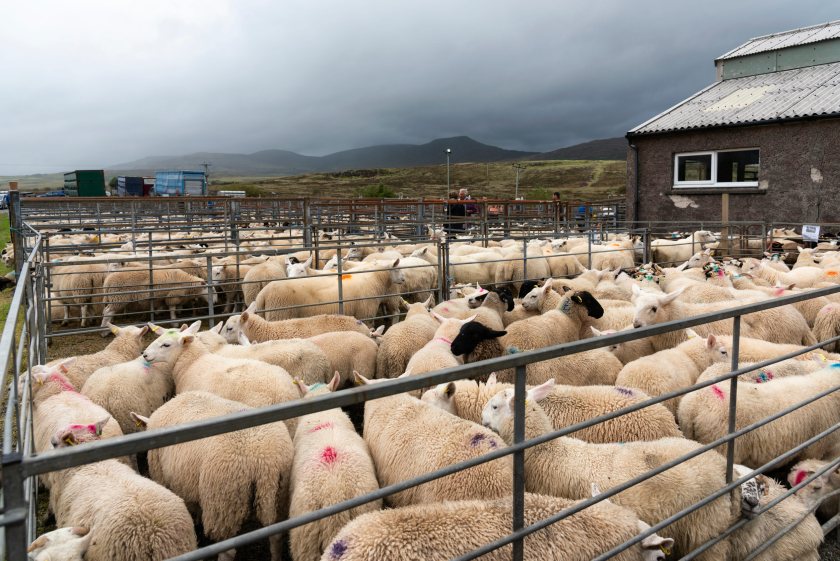
A £1.94 million government grant towards a vast wildlife estate purchase has sparked calls for parliamentary scrutiny, with tenant farmers questioning whether public money could have delivered greater benefits elsewhere.
The Tenant Farmers Association (TFA) has asked the House of Commons Public Accounts Committee to examine Defra's contribution towards The Wildlife Trusts' £30 million acquisition of the Rothbury Estate in Northumberland.
The association wants answers over how the funding was awarded, whether it represents value for taxpayers and whether alternative investments in farm environmental schemes were properly considered.
The challenge comes amid continuing frustration over access to agricultural support, after September's Sustainable Farming Incentive (SFI) application window closed within six hours when its initial £233m allocation was exhausted, before Defra increased the funding to £253m.
In a letter dated 3 November, TFA chief executive George Dunn urged committee chairman Sir Geoffrey Clifton-Brown MP to examine the decision and establish what safeguards were attached to the public funding.
Mr Dunn wrote: "Our concern is not to dispute the importance of nature recovery".
He explained that the association wanted to establish whether Defra had rigorously assessed the investment against alternative uses of public money, including further support through SFI.
The Rothbury Estate, covering around 9,500 acres, was purchased by The Wildlife Trusts in late October following a major fundraising campaign backed by Sir David Attenborough.
The acquisition is intended to support large-scale nature recovery, habitat restoration and more sustainable land management.
However, the estate also contains 12 working farms, raising questions about the future of agricultural production and established farming businesses.
FarmingUK previously reported concerns over the future of 12 working farms following the £30 million purchase, including fears over livestock production and the long-term viability of agricultural businesses.
The TFA is now questioning whether individual farming tenants were consulted before Defra committed the funding.
It wants clarity over how the department assessed their circumstances and the potential implications for existing tenancies, property rights and long-term land management.
The Wildlife Trusts have previously said existing tenancy agreements will be respected and that regenerative farming practices will be optional for remaining tenanted farms.
Changes are planned on land managed directly by the conservation charities, including reducing sheep numbers and increasing cattle grazing to encourage greater habitat diversity.
Beyond the implications for farmers, the TFA is seeking greater transparency over the financial decision.
It has asked whether the grant was awarded through an open funding programme, what evidence justified the contribution and whether Defra will publish its business case, investment appraisal and independent valuation.
The association also wants to know what measurable environmental targets have been agreed and whether safeguards exist to recover public money if promised benefits are not delivered.
In his letter, Mr Dunn stressed the importance of ensuring public investment delivers demonstrable benefits through a transparent process, with "proper protection for taxpayers".
The government has previously defended the contribution, explaining that it was provided through funding separate from the agricultural support budget.
Speaking to MPs on the Environment, Food and Rural Affairs Committee on 27 October, Defra farming director Mike Rowe said: "This funding did not come from the farming budget."
He explained that the investment supported the government's commitment to protecting 30% of land and sea for nature by 2030.
The distinction means the grant could not necessarily have been redirected into existing farm support schemes.
Nevertheless, the TFA maintains that the decision warrants closer examination, particularly over whether the investment represents value for taxpayers and whether sufficient consideration was given to affected farming businesses.
The Public Accounts Committee has been asked to pursue the questions with Defra, although a formal investigation has not been confirmed.