Lamb prices have defied the autumn surge in auction numbers to remain nearly 10% above last year's levels, as tighter supplies and firm demand continue to support the trade.
The latest market update from Quality Meat Scotland (QMS) shows liveweight prices traded between 320p/kg and 330p/kg during October, sitting 25% to 30% above the five-year average.
Prices were just over 30% below their new-season peak by the third week of October, although they held up slightly better than usual during the seasonal increase in marketings.
Store lamb prices have also climbed by around 15% year on year, outpacing gains in the finished trade as competition among finishers remains strong.
Despite Scottish auction throughput reaching its seasonal peak in October, QMS said smaller lamb crops across Great Britain were continuing to limit overall availability.
Iain Macdonald, QMS market intelligence manager, said: "Auction numbers have grown in Scotland this autumn, but smaller lamb crops in Scotland and England mean GB supplies remain fundamentally tight."
Scotland's June Agricultural Census recorded a 1.6% reduction in the lamb crop, despite a second consecutive slight increase in the breeding ewe flock.
England also reported a 0.5% decline in lamb numbers, pointing to limited scope for a significant recovery in domestic production.
Lamb slaughter at abattoirs across Great Britain fell sharply compared with year-earlier levels between July and September, with smaller lamb crops and drought-related grazing difficulties likely contributing to slower marketings.
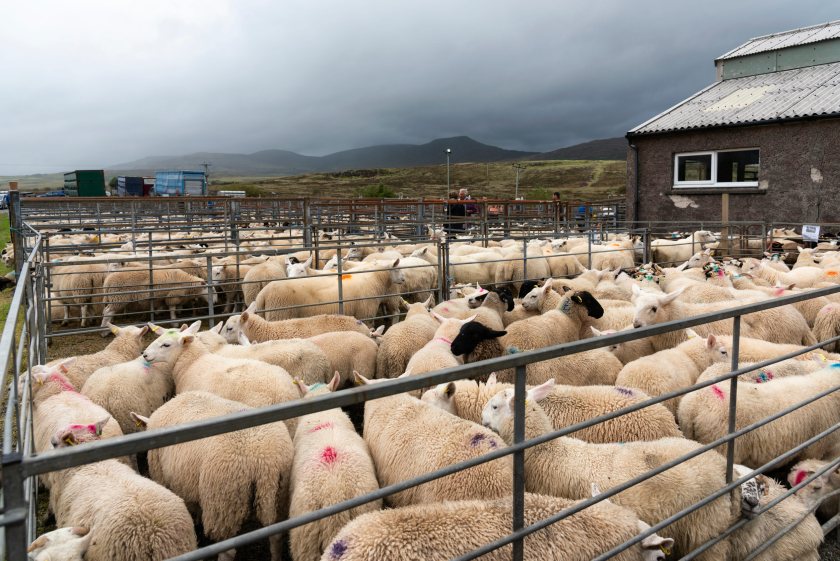
However, Scottish auction sales have recovered from a sluggish summer, with season-to-date throughput moving slightly ahead of 2025 levels.
The stronger store trade has provided a further indication of confidence among finishers, despite tighter supplies and higher purchasing prices.
Store lamb throughput has been slightly lower than last season, adding to competition for available stock.
"These market forces have also impacted the store trade, where a high level of competition for store lambs is a signal of finisher confidence," Mr Macdonald said.
Total UK lamb availability during the first nine months of 2026 was broadly unchanged from the previous year, as increased imports offset lower domestic production and a slight rise in exports.
However, export volumes eased during the summer following a strong start to the year, with reduced domestic output contributing to the slowdown.
QMS said the pattern also suggested a shift towards supplying the home market as domestic production tightened.
Imports continued to rise despite higher prices, reflecting demand for lamb within the UK market.
Strong global lamb prices and production constraints in the Southern Hemisphere have pushed up the cost of imported lamb, while overseas supplies could become more limited towards the end of the year.
Looking ahead, lamb marketings are expected to remain seasonally high, with a pre-Christmas peak likely in December.
However, the smaller lamb crop means supplies could struggle to match year-earlier levels during the opening months of 2027.
QMS expects tight availability and continued demand to support the trade, although rising retail prices could put pressure on consumer purchases.
A stronger pound could also reduce export returns, while tight supplies across the European Union may continue to provide opportunities for British lamb exporters.
Mr Macdonald said: "Tight supplies and firm demand should continue to provide support, although the impact of higher retail prices on sales volumes remains a risk to watch, along with the impact of a stronger pound on export returns."