
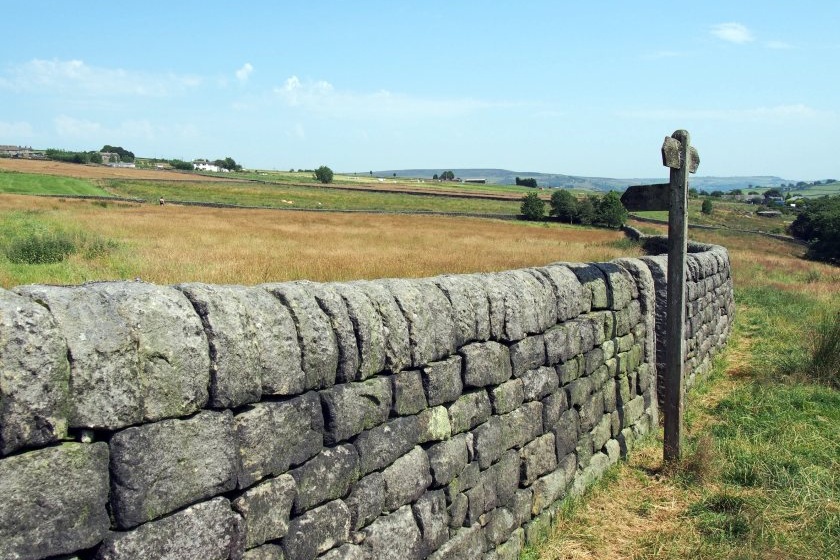
Farmers who miss deadlines to renew footpath declarations could weaken their protection against new public rights of way claims, rural property specialists have warned.
Strutt & Parker is urging landowners to check their Section 31(6) paperwork, which helps prevent additional public routes becoming established across farmland through long-term use.
The declarations, made under the Highways Act 1980, allow landowners to formally record that they do not intend to dedicate further public rights of way across their property.
However, they are time-limited, with deposits made before October 2013 originally subject to a 10-year renewal period, compared with 20 years for those submitted after that date.
This means older deposits may already be out of date if the necessary declarations were not submitted before their deadlines.
Matthew Scott, a director in Strutt & Parker's rural team, warned that the lengthy renewal periods made it easy for landowners to overlook important dates.
“But it is important to keep an eye on when they are due for renewal, as these deposits are time limited,” he said.
“Given these lengthy periods, it can be easy for renewal dates to pass unnoticed, so keeping track of when action is needed is an important housekeeping exercise.”
Renewal declarations must be lodged before the relevant deadline, confirming that no additional rights of way have been dedicated since the original deposit or previous declaration.
Landowners who have missed a deadline are advised to seek professional guidance rather than assume an expired declaration can simply be renewed retrospectively.
The warning also applies to farmers who have never submitted a Section 31(6) deposit, particularly where walkers may be using unofficial routes across their land.
Scott explained that existing footpaths can sometimes lead to alternative routes developing when people repeatedly take shortcuts.
“If there is an existing footpath, walkers can unintentionally create alternative routes by taking shortcuts.”
He warned that repeated public use of these routes could eventually result in claims for additional rights of way.
Under the Highways Act 1980, uninterrupted public use of a route for 20 years can, in certain circumstances, create a presumption that it has become a public highway.
Such claims can create disputes over access and potentially complicate farm management where new permanent routes are established.
A Section 31(6) deposit provides evidence that a landowner does not intend to dedicate additional public routes through long-term use.
However, the protection is not absolute and does not remove existing rights of way or necessarily prevent claims based on historic evidence or use predating the original deposit.
Landowners seeking protection in England must submit a CA16 form to the relevant local authority, together with a highways statement and a map identifying existing public rights of way.
The official government form and guidance is available online, while application fees vary between local authorities and may depend on the number of land parcels involved.
Farmers with existing deposits are being encouraged to check the dates of their original statements and latest declarations, particularly where ownership or land boundaries have changed.
Those unsure of their paperwork can contact the relevant local authority to check its records and establish whether further action is required.
Strutt & Parker is also advising landowners to review access arrangements across their farms and estates, particularly where unofficial shortcuts appear to be developing.
Keeping declarations up to date and checking that walkers are following established routes could help reduce the risk of future disputes over public access to farmland.